Vegamovies - watch Bollywood, South Indian and Hollywood films free
Vegamovies is built around Indian cinema: 538 films and 117 series, with Hindi, Tamil, Telugu and Malayalam titles sitting next to Hollywood releases. Action and drama dominate the shelf at 283 and 247 titles, and everything streams in HD without registration.


Most people arrive at Indian cinema through a single film: a Hindi melodrama a parent had on videotape, a Telugu action picture a friend insisted on, or one of the few titles that broke through internationally in the past decade. What follows is usually the same problem. The recommendation list is enormous, the labels are confusing, and nobody explains which tradition you are being handed. Hindi cinema and the film industries of southern India grew up separately, under different studio systems, in different languages, with different assumptions about what a film is for. This primer maps the main currents and ends with a watchlist a newcomer can work through.
What Bollywood does and does not mean
Bollywood is a nickname for the Hindi-language film industry centred on Mumbai, and one the industry took years to accept. The name fuses Bombay with Hollywood, an awkward fit for a body of work that owes as much to Parsi theatre, Urdu poetry and the Hindu epics as to anything American. The useful part of the word is Hindi. India releases films in more than twenty languages, and the largest industries after Hindi are Tamil, Telugu, Malayalam, Kannada and Bengali. Tamil and Telugu have in some years released more titles than Hindi cinema did.
The distinction matters in practice. A viewer who says they like Bollywood usually means they like Hindi films, and a viewer who says they do not may simply have met the wrong three. It matters when you are chasing something you half-remember, too, because a film you saw with subtitles may have been Tamil, and the Hindi version you find later may be a remake with a different cast and title. A catalogue such as Vegamovies, which sorts titles by category rather than language, will place a Tamil action film beside a Hindi thriller without comment. Knowing which is which is the viewer's job.
Hindi cinema has also never been one thing. Alongside the commercial mainstream ran a parallel movement, most famously Satyajit Ray in Bengali, making quieter, socially conscious films that won prizes abroad and played to small houses at home. Ray's Pather Panchali (1955) won at Cannes and effectively introduced Indian cinema to European audiences.
The grammar of the Hindi masala film
Masala means a blend of spices, and the word describes a film assembled from several genres rather than committed to one. The form was never accidental: a single ticket had to satisfy a family, so the film supplied romance, comedy, action, melodrama and music in proportions designed to keep everyone seated. The songs were not decoration. They were the marketing, the radio airplay and, for decades, the reason people came back a second time.
The recurring parts
- A hero with a mother, and a family wrong that has to be avenged.
- A heroine introduced by a song, often in another location and often in the rain.
- A comic subplot that eventually collides with the main story.
- A villain with a scheme, a lair and one line that outlives the film.
- An interval at roughly the halfway mark, usually on a cliffhanger.
- A climax that resolves every thread at once, however improbable the route.
The classics show the machinery working. Mehboob Khan's Mother India (1957) turned rural hardship into national myth and was nominated for the foreign-language Oscar. Ramesh Sippy's Sholay (1975), written by Salim and Javed, took the shape of a western and set it in a village terrorised by a bandit named Gabbar Singh. It ran in a Mumbai cinema for years and remains the reference point for the form.
The angry young man
Salim and Javed also wrote Zanjeer (1973) and Deewaar (1975) around an actor with a temper and a grievance, and Amitabh Bachchan became the face of the 1970s. These were films about a system that had failed and a man who had decided to settle the account himself, a figure that still shapes how Hindi heroes are written.
Romance, then the multiplex
By the 1990s the tone had turned outward, towards families in London and a courtship negotiated with parents. Aditya Chopra's Dilwale Dulhania Le Jayenge (1995) set the template so firmly that it is still screening in Mumbai three decades on. Then the multiplex arrived, audiences fragmented, and the confident three-hour masala film briefly looked dated. Ashutosh Gowariker's Lagaan (2001), a cricket epic set in the Raj with a score by A. R. Rahman, was nominated for the foreign-language Oscar and proved that scale and seriousness could coexist.
Tamil cinema, and the weight of a star
Tamil cinema is based in Chennai and known informally as Kollywood, a blend of Kodambakkam, the neighbourhood where the studios clustered, and Hollywood. It is one of the oldest industries in India and one of the most politically entangled. M. G. Ramachandran went from screen hero to chief minister of Tamil Nadu, and Jayalalithaa followed a similar path. The result is a film culture in which a star is not merely an actor but a public institution with a fan base organised like a constituency.
Rajinikanth and Kamal Haasan are the two poles. Rajinikanth's appeal is pure style, a walk and a flick of a cigarette and a line delivered as scripture, and it sustained him from the mid-1970s into the 2020s. Kamal Haasan is the more restless performer; his lead in Mani Ratnam's Nayakan (1987), a gangster story that rewrites The Godfather in a Bombay slum, is among the finest in Indian cinema.
The directors are why Tamil cinema travels. Mani Ratnam has moved between intimate drama and historical epic for four decades, from Nayakan to the two-part Ponniyin Selvan (2022 and 2023). Vetrimaaran works closer to the ground, on caste and land, in Aadukalam (2010) and Asuran (2019). Lokesh Kanagaraj has made the most commercially confident Tamil films of recent years, linking Kaithi (2019) and Vikram (2022) into a shared universe. A. R. Rahman, who arrived with Roja in 1992, later won two Academy Awards for his work on Slumdog Millionaire.
Telugu cinema, and the two-part epic
Telugu cinema is based in Hyderabad and has been called Tollywood for so long that the older Bengali use of the name is largely forgotten. It is the industry most associated with scale. Ramoji Film City, opened outside Hyderabad in the mid-1990s, is among the largest studio complexes in the world.
Telugu films tend to be broader than Tamil ones: more sentiment, more elaborate family structures, longer running times, and a hero whose entrance is treated as a public event. That breadth became a national advantage. S. S. Rajamouli spent a decade making steadily larger films before Baahubali: The Beginning (2015) and Baahubali: The Conclusion (2017) turned a Telugu story into an all-India one. RRR (2022) followed, and its song Naatu Naatu won the Academy Award for Best Original Song in 2023.
Sukumar made Rangasthalam (2018) and then the two Pushpa films with Allu Arjun; Trivikram Srinivas, a former dialogue writer, makes films that live or die on their lines; Nag Ashwin pushed Telugu production into science-fiction mythology with Kalki 2898 AD (2024). Telugu cinema also has a weakness for the two-part release, and the results are uneven.
The pan-India phenomenon
Pan-India is a distribution term that became a genre. It describes a film shot in one language and released the same day in several others, with dubbed versions and a campaign aimed at audiences who have never watched a film in the original. Baahubali was the turning point and Baahubali 2 the proof: its Hindi version became the first dubbed film to cross the hundred-crore mark in that market.
What followed was not all epic. KGF: Chapter 1 (2018) and KGF: Chapter 2 (2022), made in Kannada by Prashanth Neel, turned a grim mining story into a five-language event. Kantara (2022), rooted in coastal folklore and land disputes, became a national hit on word of mouth. Pushpa: The Rise (2021) built a Hindi audience for a Telugu film about a red sandalwood smuggler, largely on the strength of one performance and one dance step.
Before pan-India, there were remakes
For decades the traffic ran one way. A Tamil or Telugu hit would be bought, recast in Hindi and released under a new title, usually within two or three years: Ghajini in 2008 from the Tamil original, Wanted in 2009 from the Telugu Pokiri, Singham in 2011, Drishyam in 2015 from Malayalam. Those remakes were often competent, and also a way of withholding the original from a large audience. Simultaneous release replaced that trade with something simpler: put the original everywhere at once, add a dubbed track, keep the star.
What changed
- Multiplex screens spread into smaller cities, giving a large film more places to open.
- Satellite television normalised the dubbed voice long before streaming did.
- Streaming made subtitles ordinary and gave older films a second life.
- A run of expensive Hindi films that underperformed made exhibitors more willing to programme a Telugu release.
The limits are real. Pan-India is a marketing decision, not a guarantee. Films with dense local idiom or dialogue-driven comedy often stay home, and for every Kantara there are several films that opened in five languages and were watched in one. The label tells you how a film was sold, not how good it is.
Dubbing, subtitles and what gets lost
Almost every major South Indian film now reaches Hindi audiences in more than one form: the original with subtitles, a dubbed version, and occasionally a partly reshot version with a different cast. The dubbed version is the one most people meet first, and the one most likely to disappoint. For years these films were dubbed quickly and cheaply, with a small repertory of voices and a script that flattened regional slang into generic Hindi. That has improved a great deal, and some stars now record their own Hindi dialogue. It is still a translation, and translation loses things.
A practical rule
- For spectacle such as Baahubali, RRR or KGF, the dubbed version is usually fine, because the image carries most of the meaning.
- For dialogue-driven films such as Nayakan, Vikram or Asuran, choose subtitles. The rhythm of the lines is the point.
- For songs, subtitles are almost always better, since dubbed lyrics are rewritten to fit a melody.
- Check the running time before you commit. Dubbed cuts are sometimes trimmed, and a missing twenty minutes can break a plot.
If you cannot tell which version you have, look at the audio language rather than the title. Vegamovies holds a broad catalogue, and in a broad catalogue it pays to confirm the audio before you settle in. None of this is an argument against dubbing. A dubbed film you finish is worth more than a subtitled film you abandon in the first hour.
Kannada, Malayalam and the rest of the map
Kannada cinema, based in Bengaluru, spent years in the shadow of its neighbours before KGF and Kantara made it a source of national releases; 777 Charlie (2022), a film about a man and a dog, reached audiences well beyond Karnataka on goodwill alone. Malayalam cinema, based in Kochi, has the strongest reputation for writing. Drishyam (2013) was remade in several languages including Hindi, while Kumbalangi Nights (2019) and The Great Indian Kitchen (2021) found international viewers on streaming. Malayalam films are usually shorter, cheaper and more interested in behaviour than spectacle, which makes them a useful corrective after three hours of mythology.
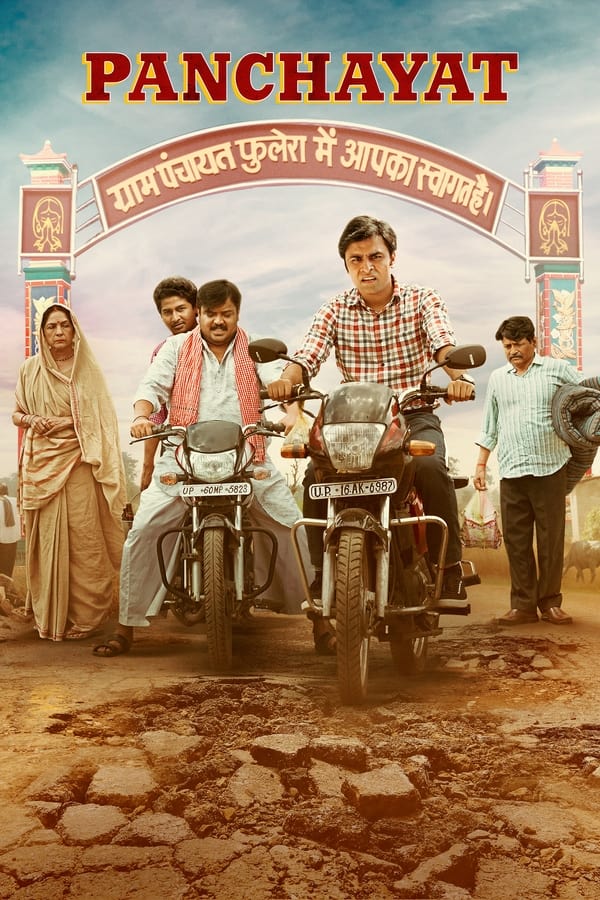
Bengali cinema carries the prestige of Ray and Ritwik Ghatak, and Marathi cinema has produced a steady run of socially engaged films. India also makes a great deal of television. Series such as Sacred Games (2018), The Family Man (2019 onwards) and Panchayat (2020 onwards) have the same mix of local texture and national reach that the pan-India films were built on, and a long-form series is often an easier way in than a three-hour epic.
How to build an entry watchlist
A watchlist built by genre will collapse. One built by era, industry and director will hold. The commonest mistake is to start with the biggest films and conclude that Indian cinema is exhausting; the second is to start with the art-house canon and conclude that it is austere.
Five principles
- Alternate spectacle with dialogue. After RRR, watch Drishyam.
- Follow one star and one director rather than one genre.
- Watch each industry once in its original language before deciding you do not like it.
- Do not skip the older films. They are why current films look the way they do.
- Give a film its interval. Two sittings is closer to how it was made.
A starting order
- Sholay (1975, Hindi), the masala template and still the most quoted.
- Dilwale Dulhania Le Jayenge (1995, Hindi), the romance that defined a decade.
- Lagaan (2001, Hindi), the prestige crossover, with Rahman at his most melodic.
- Nayakan (1987, Tamil), Mani Ratnam and Kamal Haasan at their most controlled.
- Vikram (2022, Tamil), contemporary Tamil action, and a fair test of the new style.
- Baahubali: The Beginning (2015, Telugu), where pan-India began.
- RRR (2022, Telugu), the maximalist statement and the easiest film here to love.
- Kantara (2022, Kannada), a smaller industry with a very specific world.
- Drishyam (2013, Malayalam), the writing-first end of the spectrum.
Start here, this month
The practical version of all this is small. Set aside two evenings this week, one for a Hindi film made before 2000 and one for a South Indian film released in the last five years. Watch the first with the volume up and your phone in another room, and the second in whichever language you can get, subtitles on if the audio is not Hindi. Note what you respond to, whether songs, star, pacing or writing, and let that decide the next two. A catalogue of 538 films and 117 series, which is what Vegamovies currently holds, is large enough to absorb a bad first pick, but a good second pick saves months of drifting.
The longer view is that Indian cinema is plural. Hindi masala, Tamil star vehicles, Telugu epics, Malayalam thrillers and Kannada folklore films are made by different industries, for different audiences. The pan-India film is the one place where all of them meet, and it is a useful entry point, but a doorway rather than a destination. The films that stay with you are usually the ones made for a smaller room.
Frequently asked questions
Is Vegamovies free to watch?
Yes. Every title on Vegamovies plays without a subscription, a payment or a trial. There is no account step either: open a film or an episode and the player starts.
Do I need an account to stream on Vegamovies?
No. Accounts are optional on Vegamovies and only exist for the watchlist and favourites. Browsing, searching and playback all work without signing in.
Can I watch Vegamovies on my phone or tablet?
Yes. The player is responsive, so the same title plays on a phone, tablet, laptop or TV browser. On mobile data, standard definition uses roughly a third of the bandwidth of HD.
How often does Vegamovies add new movies and series?
Vegamovies is topped up as new releases appear. The catalogue currently holds 656 title pages, and the newest additions sit at the top of the Movies and TV Series archives.
What video quality does Vegamovies stream in?
HD where the source allows it. Every listing is tagged HD, and the player adapts to your connection rather than forcing a single bitrate. Each title page shows the runtime, rating and cast so you know what you are opening.